Can Liquid Screed Be Used in Garages, Warehouses and Industrial Buildings?
Can Liquid Screed Be Used in Garages, Warehouses and Industrial Buildings?
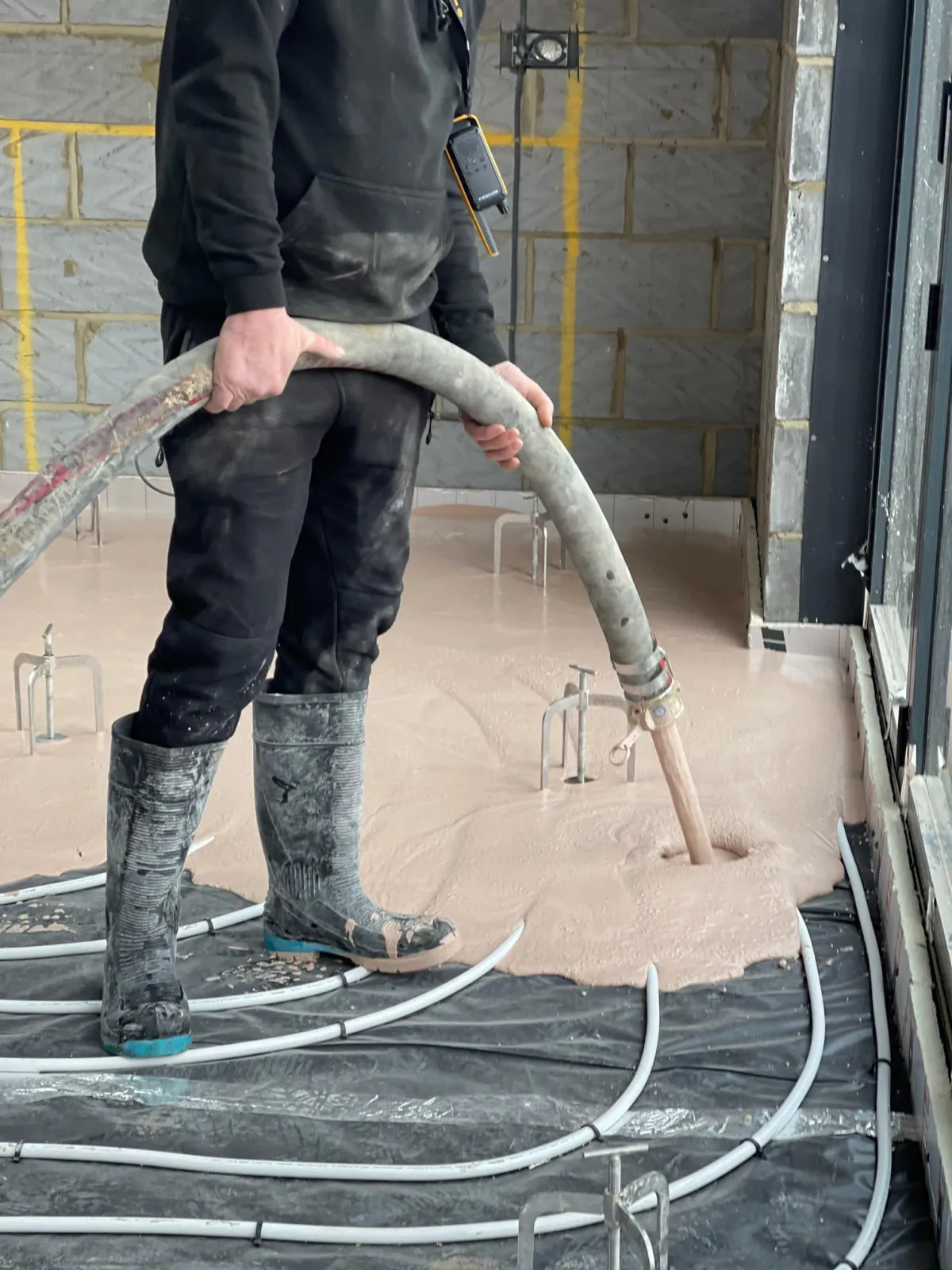
When people think of liquid screed, they often associate it with homes, extensions and underfloor heating. However, liquid screed is also an excellent choice for many commercial and industrial environments, offering a smooth, durable base for a wide range of floor finishes.
Whether you're constructing a new garage, warehouse, workshop or industrial unit, the right screed specification can improve both the performance and lifespan of your floor.
Is Liquid Screed Suitable for Commercial Spaces?
Yes – provided the correct product is specified for the intended use.
Liquid screed is commonly used in:
Garages
Warehouses
Distribution centres
Workshops
Retail units
Office buildings
Schools and healthcare facilities
Its self-levelling properties make it ideal for creating large, flat floor areas that are ready to receive resin coatings, tiles, vinyl or other commercial floor finishes.
At Surrey Flow Screed, we've completed projects across Surrey and the South East for both domestic and commercial clients, tailoring every installation to the building's requirements.
Strength and Performance
Modern liquid screeds are designed to provide excellent compressive strength and dimensional stability.
For industrial or high-traffic environments, the screed specification can be selected to suit the expected loading and intended floor finish. This ensures the floor performs reliably for years while maintaining a smooth, level surface.
It's important to remember that the screed forms the subfloor—it is not usually intended to be the final wearing surface in heavy industrial environments.
Compatible with Underfloor Heating
Many commercial buildings now use underfloor heating to improve energy efficiency and create a more comfortable working environment.
Liquid screed is particularly effective because it completely surrounds heating pipes, delivering consistent heat transfer across large floor areas. This helps reduce energy consumption while maintaining even temperatures throughout the building.
Common Mistakes to Avoid
To achieve the best results, avoid these common issues:
Choosing the wrong screed specification for the intended load.
Assuming all liquid screeds are suitable for industrial use.
Installing floor finishes before moisture testing.
Failing to prepare the subfloor correctly.
Working with an experienced screeding contractor helps ensure the correct product is selected from the outset.
Frequently Asked Questions
Can liquid screed support heavy equipment?
Yes, when the correct screed specification has been designed for the expected loads and floor construction.
Can liquid screed be left as the finished floor?
In most commercial and industrial settings, liquid screed acts as the subfloor and is normally covered with a suitable wearing surface such as resin, tiles or specialist coatings.
Is liquid screed suitable for garages?
Yes. It's commonly used in domestic and commercial garages, providing a level, durable base for the final floor finish.
Speak to Surrey Flow Screed
Every commercial and industrial project has different requirements, which is why expert advice is essential. At Surrey Flow Screed, we work with builders, developers and business owners across Surrey and the South East to deliver liquid screed installations that are built for long-term performance.
If you're planning a garage, warehouse, workshop or commercial development, contact Surrey Flow Screed today for a free, no-obligation quotation and expert guidance.
