Can You Lay Tiles Directly on Liquid Screed? Preparation, Adhesives and Best Practice
Can You Lay Tiles Directly on Liquid Screed? Preparation, Adhesives and Best Practice
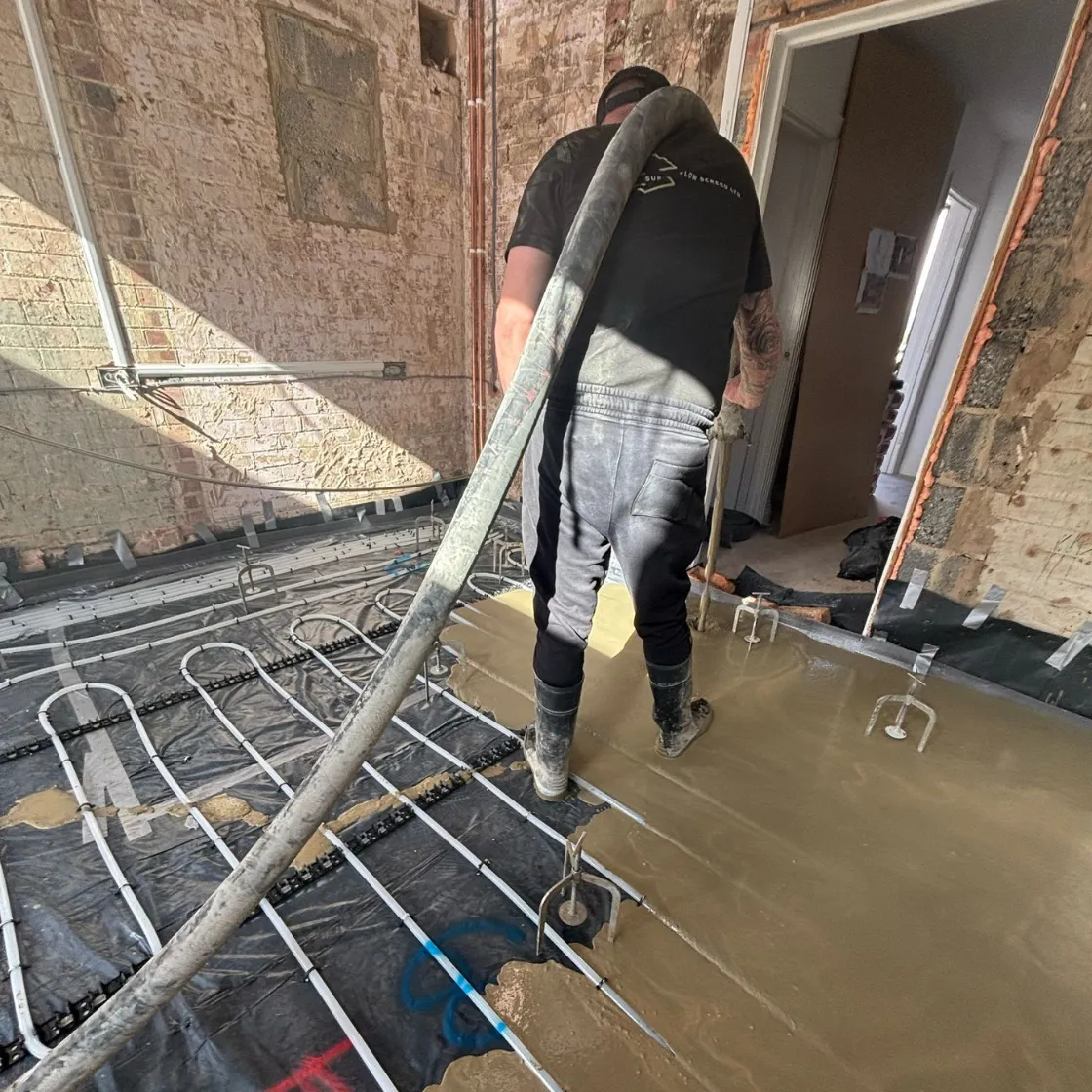
Liquid screed provides a smooth, level base for many types of floor covering, including ceramic and porcelain tiles. However, before tiling can begin, the screed must be sufficiently dry and correctly prepared to ensure the adhesive bonds properly and the finished floor performs as intended.
Whether you're renovating a property, completing a new build or managing a commercial project, understanding the requirements for tiling over liquid screed can help prevent costly problems later.
At Surrey Flow Screed, we provide professional liquid screed installation throughout Surrey and the South East, helping homeowners, builders and property developers prepare for their final flooring installation.
Can You Tile Directly onto Liquid Screed?
Yes, tiles can be installed over suitable liquid screed, provided the substrate meets the requirements of the screed, adhesive and tile manufacturers.
However, this does not always mean tiles can be laid immediately after the screed has dried. Some liquid screeds require sanding to remove surface laitance, while others may need specific preparation or priming.
The screed must also meet the relevant moisture requirements before tiling begins. Simply checking that the surface looks dry is not sufficient.
How Should Liquid Screed Be Prepared Before Tiling?
Correct preparation helps create a suitable surface for the tile adhesive and reduces the risk of bonding problems.
1. Allow the Screed to Dry
The screed must reach the moisture level specified for the intended tiling system. Drying time depends on the screed product, thickness and site conditions.
Appropriate moisture testing should be completed before the flooring contractor proceeds.
2. Remove Surface Laitance Where Required
Some liquid screeds develop a weak surface layer known as laitance. Where the product specification requires it, this layer should be removed through suitable sanding or another approved preparation method.
Leaving laitance in place can interfere with the bond between the screed and tile adhesive.
3. Clean the Surface Thoroughly
Dust, loose material and other contaminants should be removed before the adhesive is applied. A clean substrate helps the installation system perform as intended.
4. Apply the Correct Primer
Depending on the screed type and adhesive system, a suitable primer may be required. This is particularly important when working with certain calcium sulphate-based screeds, where the adhesive manufacturer may specify a particular preparation system.
Always follow the relevant product instructions rather than assuming one primer is suitable for every screed.
Which Tile Adhesive Should You Use?
The correct adhesive depends on the screed type, tile material, tile size and the manufacturer's installation requirements.
Calcium sulphate-based screeds may require specific preparation and adhesive compatibility measures to help prevent problems at the interface between the screed and adhesive.
Large-format porcelain tiles, natural stone and other specialist finishes may have additional installation requirements.
Before starting work, confirm that the adhesive is suitable for the substrate and that any required priming, moisture checks and preparation have been completed.
Common Mistakes to Avoid
Several mistakes can affect the quality of a tiled floor installed over liquid screed:
Tiling before the screed reaches the required moisture level.
Failing to remove laitance where necessary.
Using an unsuitable primer or adhesive.
Applying adhesive over a dusty or contaminated surface.
Ignoring movement joints in the screed or floor construction.
Failing to follow the tile and screed manufacturers' instructions.
Careful preparation and coordination between the screeding contractor and tiler can help reduce these risks.
Frequently Asked Questions
Can you tile over anhydrite liquid screed?
Yes. Tiles can be installed over anhydrite screed when it has been correctly prepared, meets the required moisture limits and is compatible with the specified adhesive system.
Does liquid screed need sanding before tiling?
Some products require sanding to remove laitance, while others have different preparation requirements. Always check the manufacturer's instructions for the specific screed.
How long should I wait before tiling over liquid screed?
There is no universal waiting period. The required time depends on the screed type, thickness, drying conditions and the moisture requirements of the flooring system. Appropriate testing should confirm readiness.
Contact Surrey Flow Screed for Expert Advice
At Surrey Flow Screed, we provide professional liquid screed installation for residential and commercial projects throughout Surrey and the South East. Our team can help you understand the requirements for your chosen screed and plan the preparation needed before the final flooring is installed.
Whether you're completing a new build, home extension or commercial development, contact Surrey Flow Screed today for expert advice and a free, no-obligation quotation.
