Liquid Screed for Property Developers: How to Plan Flooring Across Multiple Units
Liquid Screed for Property Developers: How to Plan Flooring Across Multiple Units
For property developers managing multiple homes, apartments or commercial units, choosing the right screeding contractor can make a significant difference to project scheduling and overall construction efficiency. Coordinating floor preparation, screed installation and subsequent trades requires careful planning, particularly when working to tight deadlines.
Liquid screed offers several practical advantages for larger developments, including efficient installation across extensive floor areas and compatibility with many underfloor heating systems.
At Surrey Flow Screed, we provide professional liquid screed installation throughout Surrey and the South East, supporting builders, developers and construction professionals with residential and commercial projects.
Why Choose Liquid Screed for Larger Developments?
Liquid screed is particularly well suited to projects where consistent floor preparation and efficient installation are important.
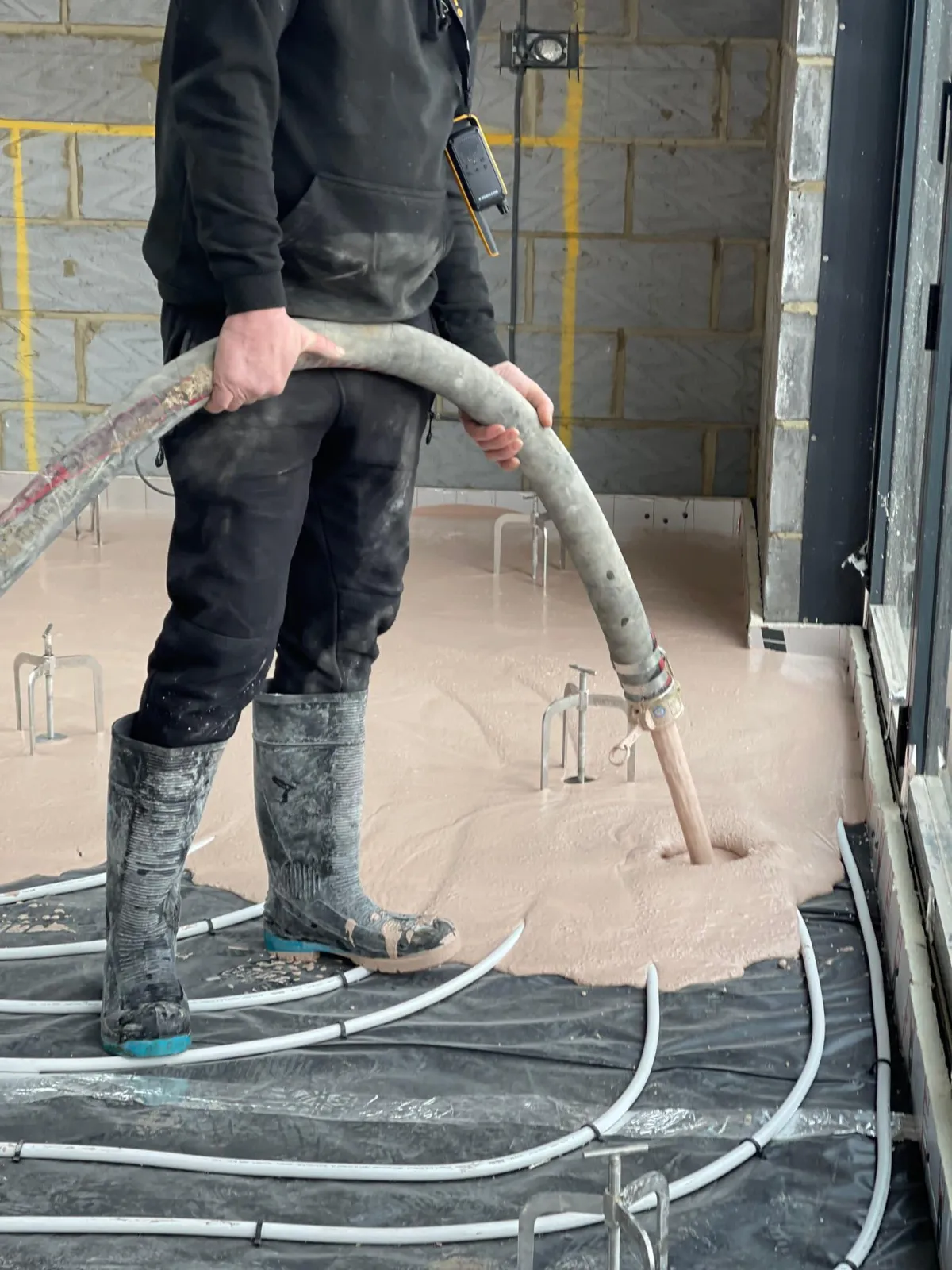
Its flowing consistency allows it to be pumped into position, helping contractors cover large areas efficiently. This can be beneficial when multiple rooms or units need to be completed as part of a coordinated construction programme.
Key advantages include:
Efficient installation: Pumped application can reduce the manual labour involved in levelling large floor areas.
Consistent surface finish: Correct installation helps create a suitable base for the specified final flooring.
Underfloor heating compatibility: Suitable liquid screeds can flow around heating pipes, supporting effective heat transfer.
Programme coordination: Planned installation across multiple units can help developers organise subsequent construction stages.
The most appropriate screed system will depend on the building design, floor construction, loading requirements and manufacturer's specification.
How Should Developers Plan Screed Installation?
Successful screeding across multiple units starts well before installation day.
1. Establish Floor Areas and Specifications
Confirm the floor area, required screed thickness and intended floor finish for each unit. Differences in floor construction or heating systems may mean that individual areas require separate specifications.
Accurate information helps the contractor calculate quantities and prepare a suitable quotation.
2. Coordinate Underfloor Heating
Where underfloor heating is installed, the pipework layout, testing requirements and screed depth should be agreed before the pour. Coordination between the heating installer and screeding contractor helps reduce the risk of delays.
3. Prepare the Site
Insulation, membranes, perimeter edging and other required components should be installed and checked before screeding begins. Site access and pump positioning should also be considered, particularly on larger developments.
4. Plan the Installation Schedule
Developers should coordinate screeding with other trades and allow sufficient time for installation, drying, moisture testing and flooring preparation.
Although liquid screed can be installed efficiently, the drying stage should never be underestimated when planning completion dates.
Managing Quality Across Multiple Units
Consistency is important when delivering several properties within the same development.
A clear specification, agreed installation sequence and documented site checks can help maintain standards across different units.
Developers should also ensure that any movement joints, changes in floor construction and underfloor heating requirements are addressed in the design.
Before the final floor covering is installed, each area should meet the relevant requirements for surface preparation and moisture content.
Maintaining clear communication between the main contractor, screeding team and flooring installer helps identify issues early and reduces the likelihood of remedial work.
Common Mistakes Developers Should Avoid
Several planning issues can affect screeding programmes:
Booking installation before all units are properly prepared.
Providing inaccurate floor measurements or thickness specifications.
Failing to coordinate screeding with underfloor heating installation.
Allowing insufficient time for drying and moisture testing.
Overlooking access arrangements for pumping equipment.
Not confirming which preparation and finishing tasks are included in the quotation.
Addressing these details before installation can help projects run more smoothly.
Frequently Asked Questions
Is liquid screed suitable for apartment developments?
Yes. Suitable liquid screed systems can be used in apartments and other multi-unit developments when designed and installed to meet the relevant floor construction and performance requirements.
Can multiple units be screeded in one day?
This depends on the total floor area, site access, preparation, product requirements and available equipment. Your contractor can assess the programme and determine a realistic installation schedule.
How can developers obtain an accurate screeding quotation?
Provide floor plans, approximate areas, required thicknesses, details of underfloor heating and information about site access. A site assessment may also be required to confirm the specification and installation requirements.
Partner with Surrey Flow Screed on Your Next Development
At Surrey Flow Screed, we provide professional liquid screed installation for residential and commercial projects throughout Surrey and the South East. We work with construction professionals to plan installations around project requirements and deliver a suitable screeded surface for the next stage of construction.
Whether you're developing a small group of homes or managing a larger project, contact Surrey Flow Screed today for expert advice and a free, no-obligation quotation.
