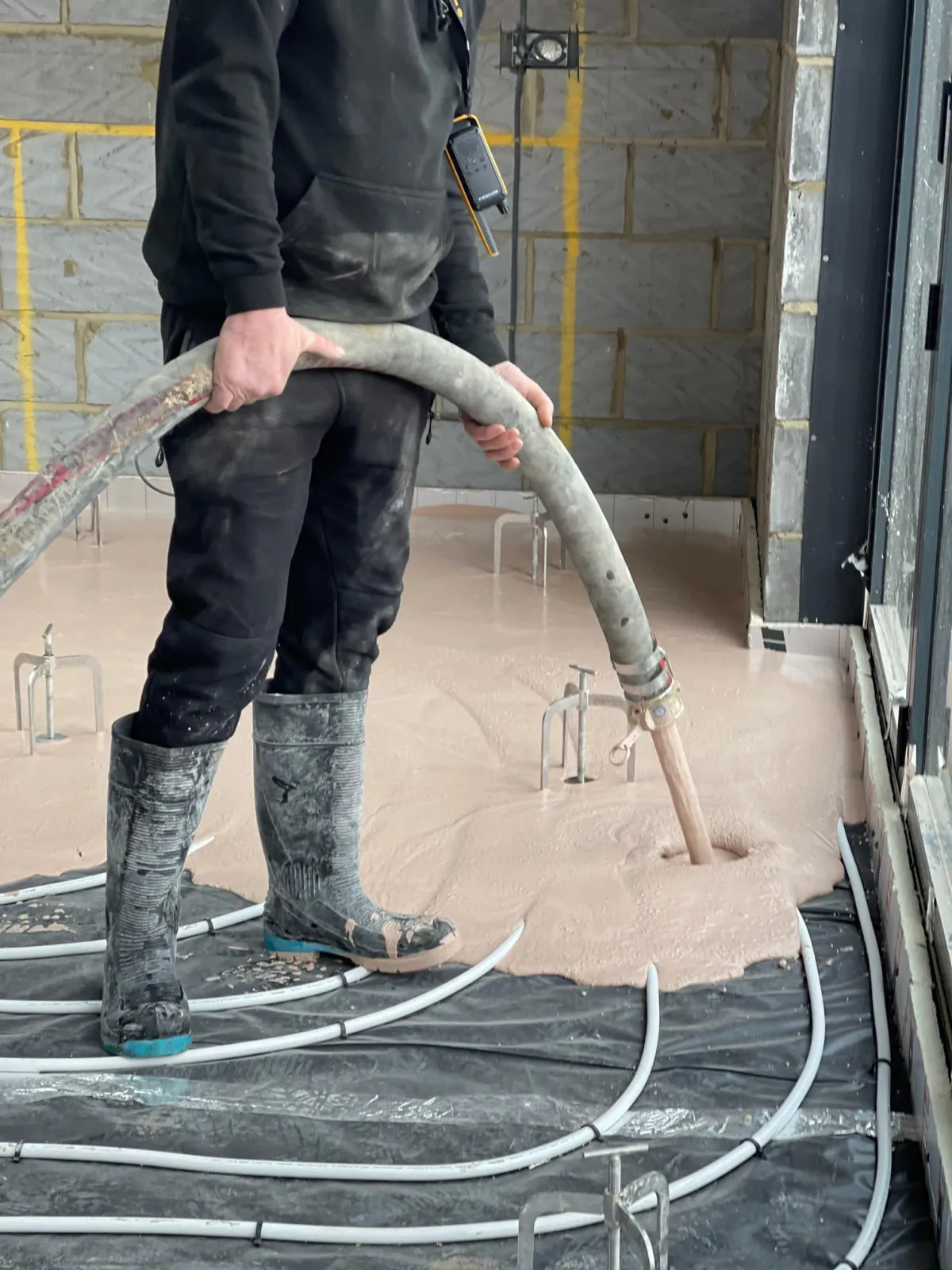
Can You Lay Tiles on Liquid Screed? Preparation, Timing & Best Practices
Can You Lay Tiles on Liquid Screed? Preparation, Timing & Best Practices
Introduction
Yes—you can lay tiles directly onto liquid screed, and when done correctly, it creates an extremely durable and high-quality finish.
However, this is also one of the most common areas where projects go wrong. Poor preparation or incorrect timing can lead to:
Tiles lifting
Cracked grout
Adhesion failure
This guide explains exactly how to do it properly.
When Can You Tile Over Liquid Screed?
Tiling should only begin once:
The screed is fully dry
Moisture levels meet required standards
As a general rule:
Drying time = ~1mm per day up to 40mm
Full readiness typically takes 3–6 weeks
👉 Always confirm with a moisture test, not just time estimates.
Why Preparation Is Critical
Liquid screed forms a surface layer called laitance, which:
Is weak and dusty
Prevents adhesives from bonding properly
Without removing this layer, your tiles are at serious risk of failure.
Step-by-Step Preparation Process
1. Sand the Surface
Removes laitance
Creates a solid bonding surface
2. Clean Thoroughly
Remove all dust and debris
Use vacuum or industrial cleaning tools
3. Apply Primer
Helps adhesives bond effectively
Reduces surface absorption issues
4. Check Moisture Levels
Use proper testing equipment
Do not rely on visual inspection
Choosing the Right Adhesive
Not all adhesives are suitable for liquid screed.
Best practice:
Use flexible tile adhesives
Follow manufacturer recommendations
Common Mistakes to Avoid
Tiling too early
Skipping sanding
Using incorrect adhesive
Ignoring moisture testing
Best Practices for Long-Term Performance
Allow full drying time
Use experienced installers
Follow a proven preparation process
Conclusion
Tiling onto liquid screed can deliver excellent results—but only if the correct process is followed from start to finish.
👉 Planning to tile over screed? Get expert advice to avoid costly mistakes.
