Is Liquid Screed Suitable for Renovations? What Homeowners Need to Know
Is Liquid Screed Suitable for Renovations? What Homeowners Need to Know
Introduction
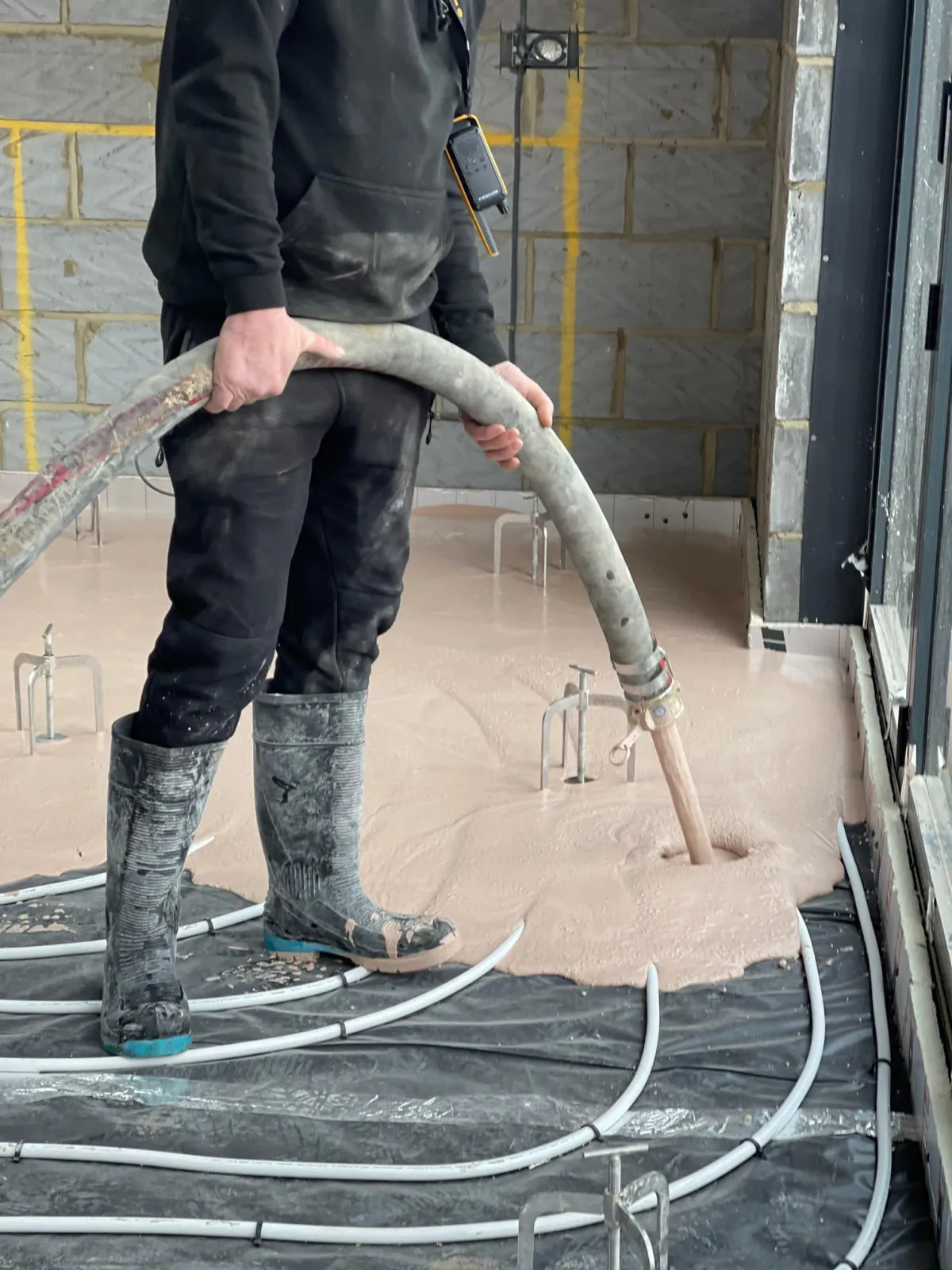
Liquid screed is often associated with new builds—but it’s increasingly being used in renovation projects across the UK.
If you're upgrading your home, adding an extension, or installing underfloor heating, liquid screed can offer major advantages. However, renovation projects come with unique challenges that don’t exist in new builds.
This guide breaks down when liquid screed works well in renovations, when it doesn’t, and what you need to consider before choosing it.
Why Homeowners Use Liquid Screed in Renovations
Compared to traditional sand and cement screed, liquid screed offers:
Faster installation (often completed in a single day)
A more level and consistent finish
Better performance with underfloor heating
Reduced labour requirements
For homeowners modernising older properties, these benefits can significantly improve both the build process and the final result.
When Liquid Screed Works Best in Renovation Projects
1. Extensions
Liquid screed is ideal for extensions, especially open-plan spaces.
It allows:
Seamless floor levels across large areas
Efficient installation over underfloor heating
A high-quality finish ready for tiles or wood flooring
2. Full Ground Floor Renovations
If you’re stripping out an entire ground floor, liquid screed can help create a completely level surface across multiple rooms.
This is particularly useful when:
Floors are uneven
Different rooms need to be brought to the same level
You’re installing UFH throughout
3. Garage Conversions
Garage floors are often uneven or poorly finished.
Liquid screed can:
Level out the existing surface
Improve insulation performance
Prepare the floor for final finishes
4. Older Properties
Many older homes have inconsistent floor levels.
Liquid screed naturally settles into a flat surface, making it ideal for:
Large-format tiles
Modern flooring systems
Achieving a clean, contemporary finish
The Biggest Challenge: Floor Height
One of the main limitations in renovations is floor build-up.
You may need space for:
Insulation
Underfloor heating pipes
Membranes
Screed
This can create issues such as:
Doors not fitting
Reduced ceiling height
Uneven transitions between rooms
👉 This is why proper planning is critical.
Access Considerations
Liquid screed is pumped into the property, which means access must be considered.
Potential challenges:
Narrow side access
Limited parking
Long distances from pump to property
An experienced contractor will assess this before installation.
Is Liquid Screed Good for Underfloor Heating in Renovations?
Yes—and this is one of its biggest advantages.
Liquid screed:
Fully surrounds heating pipes
Eliminates air gaps
Improves heat transfer
Reduces energy costs
This makes it ideal for homeowners upgrading from radiators to UFH.
Common Mistakes in Renovation Projects
Not accounting for floor height
Poor subfloor preparation
Installing flooring too early
Choosing the wrong screed thickness
These mistakes can lead to:
Cracking
Uneven floors
Expensive rework
When Liquid Screed May NOT Be Suitable
Very tight floor height restrictions
Extremely poor subfloor condition
Access limitations that prevent pumping
Conclusion
Liquid screed can be an excellent solution for renovation projects—but only with proper planning and installation.
For many homeowners, it provides:
Better performance
Faster installation
A higher-quality finish
