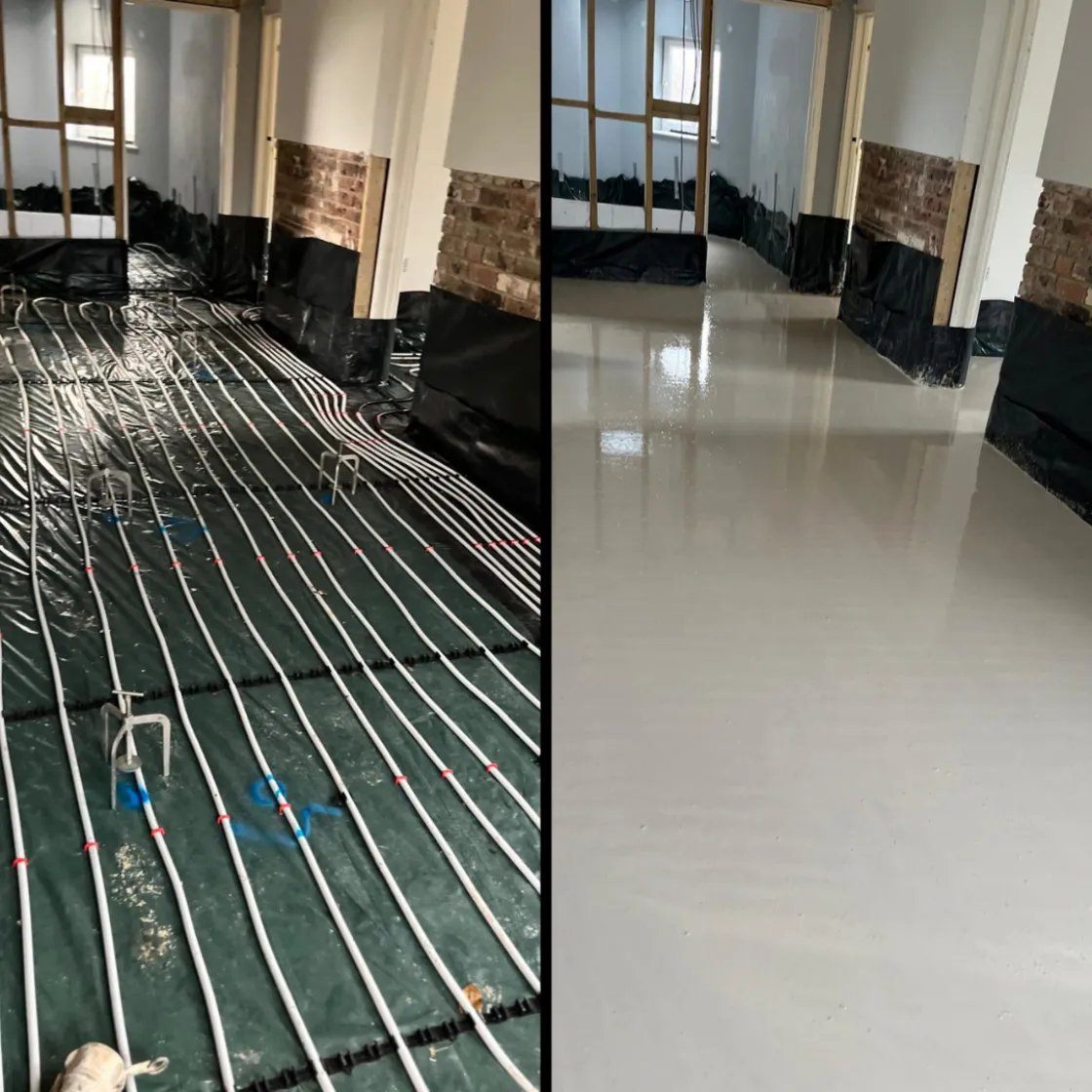
Best Screed for Underfloor Heating in the UK (Complete Guide)
Best Screed for Underfloor Heating in the UK (Complete Guide)
Introduction
Underfloor heating (UFH) is becoming standard in modern homes—but the performance of your system depends heavily on one thing: the screed you use.
Choose the wrong screed, and you’ll end up with:
Slow heat response
Higher energy bills
Uneven heating
Choose the right one, and you get a system that’s efficient, responsive, and cost-effective to run.
Why Screed Matters for Underfloor Heating
Screed sits directly above your heating pipes, meaning it controls:
How quickly heat transfers into the room
How evenly heat is distributed
How efficient your system is long-term
This makes screed selection a critical decision, not just a structural one.
The Best Option: Liquid Screed
Liquid screed (also known as flowing screed) is widely considered the best choice for UFH systems in the UK.
Key Benefits:
1. Complete Pipe Coverage
Liquid screed flows around pipes, eliminating air gaps that reduce efficiency.
2. Superior Thermal Conductivity
Heat transfers faster and more evenly across the floor.
3. Reduced Thickness Required
Can often be laid thinner than traditional screed, improving responsiveness.
4. Faster Installation
Large areas can be completed in a single day.
Alternative Option: Sand and Cement Screed
While still used, traditional screed has limitations when paired with UFH.
Drawbacks:
Risk of air pockets around pipes
Slower heat transfer
Less consistent finish
More labour-intensive installation
Cost vs Performance
While liquid screed may cost more upfront, it often results in:
Lower heating bills
Faster installation timelines
Better long-term performance
👉 From a lifecycle perspective, it’s usually the smarter investment.
Recommended Thickness for UFH
Typically 40–60mm above heating pipes
Depends on system design and property type
Correct thickness ensures:
Efficient heat transfer
Structural integrity
Common Mistakes to Avoid
Using traditional screed for large UFH areas
Incorrect thickness specification
Poor installation of heating pipes
Conclusion
For most residential and commercial UFH installations in the UK, liquid screed is the best-performing option available.
👉 Planning underfloor heating? Get expert advice before installation to avoid costly mistakes.
