Complete Guide to Liquid Screed: Everything You Need to Know Before Installing
Complete Guide to Liquid Screed: Everything You Need to Know Before Installing
Introduction
Liquid screed has become one of the most widely used flooring solutions in modern construction—but for many homeowners and even builders, it’s still not fully understood.
If you’re planning a project, choosing the right screed can impact:
Cost
timelines
floor quality
heating efficiency
This guide covers everything you need to know before installing liquid screed.
What Is Liquid Screed?
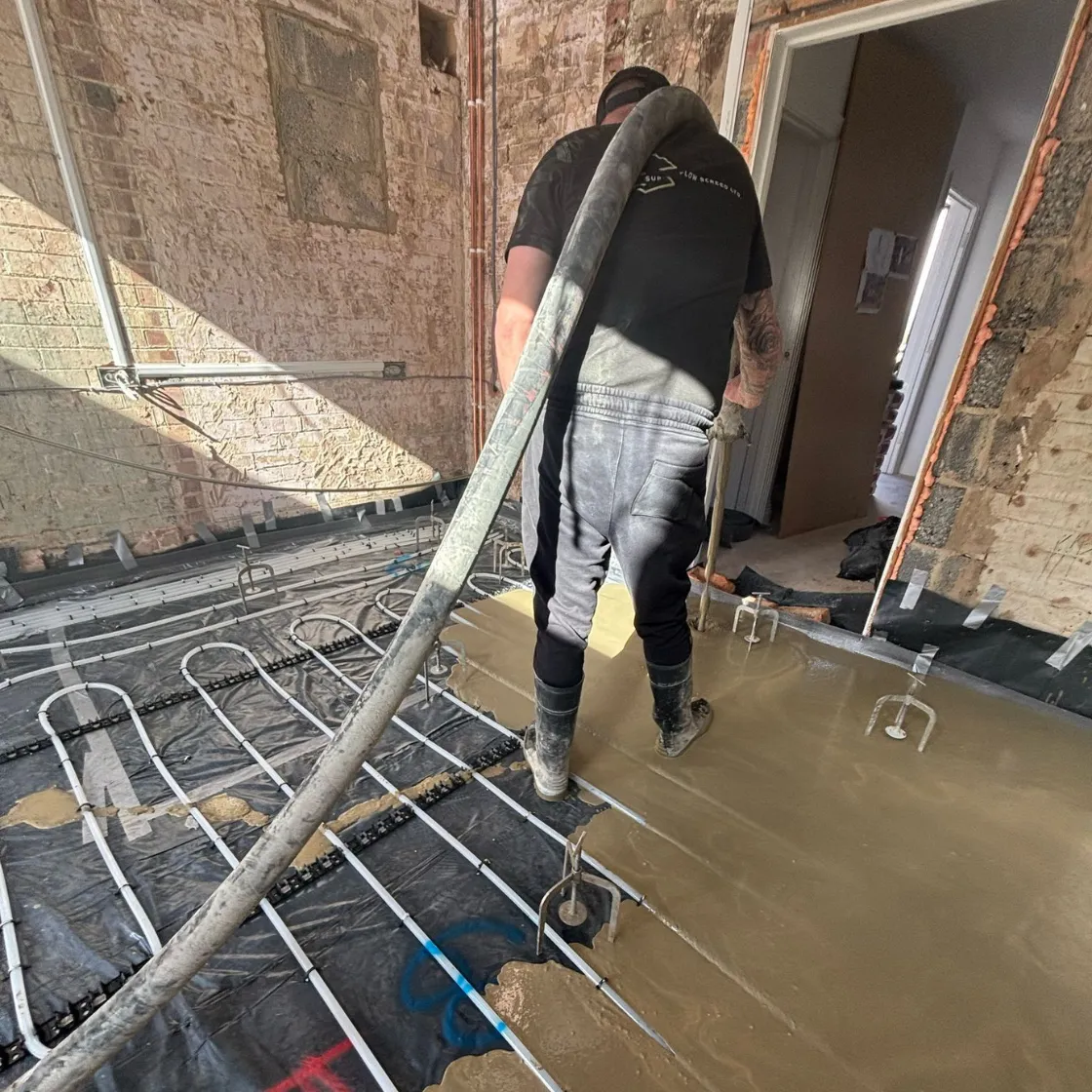
Liquid screed (also known as flowing screed) is a self-levelling material that is pumped into place to create a smooth, level floor surface.
Unlike traditional sand and cement screed, it:
Flows easily across large areas
Requires minimal manual levelling
Produces a high-quality finish
Where Is Liquid Screed Used?
It’s commonly used in:
New build homes
Extensions
Commercial buildings
Projects with underfloor heating
Key Benefits of Liquid Screed
1. Fast Installation
Large areas can be completed in a single day, reducing labour time.
2. Smooth, Level Finish
Self-levelling properties create a consistent surface ready for flooring.
3. Ideal for Underfloor Heating
Fully surrounds heating pipes for better heat transfer.
4. Reduced Labour Costs
Less manual work compared to traditional screed.
The Installation Process
Subfloor preparation
Installation of insulation and membranes
Underfloor heating setup (if required)
Pumping and pouring the screed
Levelling and finishing
Drying and curing
Each step must be carried out correctly to avoid issues later.
How Much Does Liquid Screed Cost?
Typical UK pricing:
£18–£25 per m²
Costs depend on:
Project size
Thickness
Access
Preparation work
Drying Times Explained
Walkable: 24–48 hours
Light use: 3–7 days
Full drying: 3–6 weeks
Drying time depends heavily on:
Thickness
ventilation
temperature
Common Mistakes to Avoid
Poor subfloor preparation
Incorrect thickness
Skipping sanding (laitance removal)
Rushing drying times
Is Liquid Screed Right for Your Project?
Best suited for:
Large areas
Underfloor heating systems
Projects requiring speed and precision
Conclusion
Liquid screed is one of the most efficient and high-performing flooring solutions available—but only when installed correctly.
👉 Planning a project? Get expert advice and a tailored quote today.
