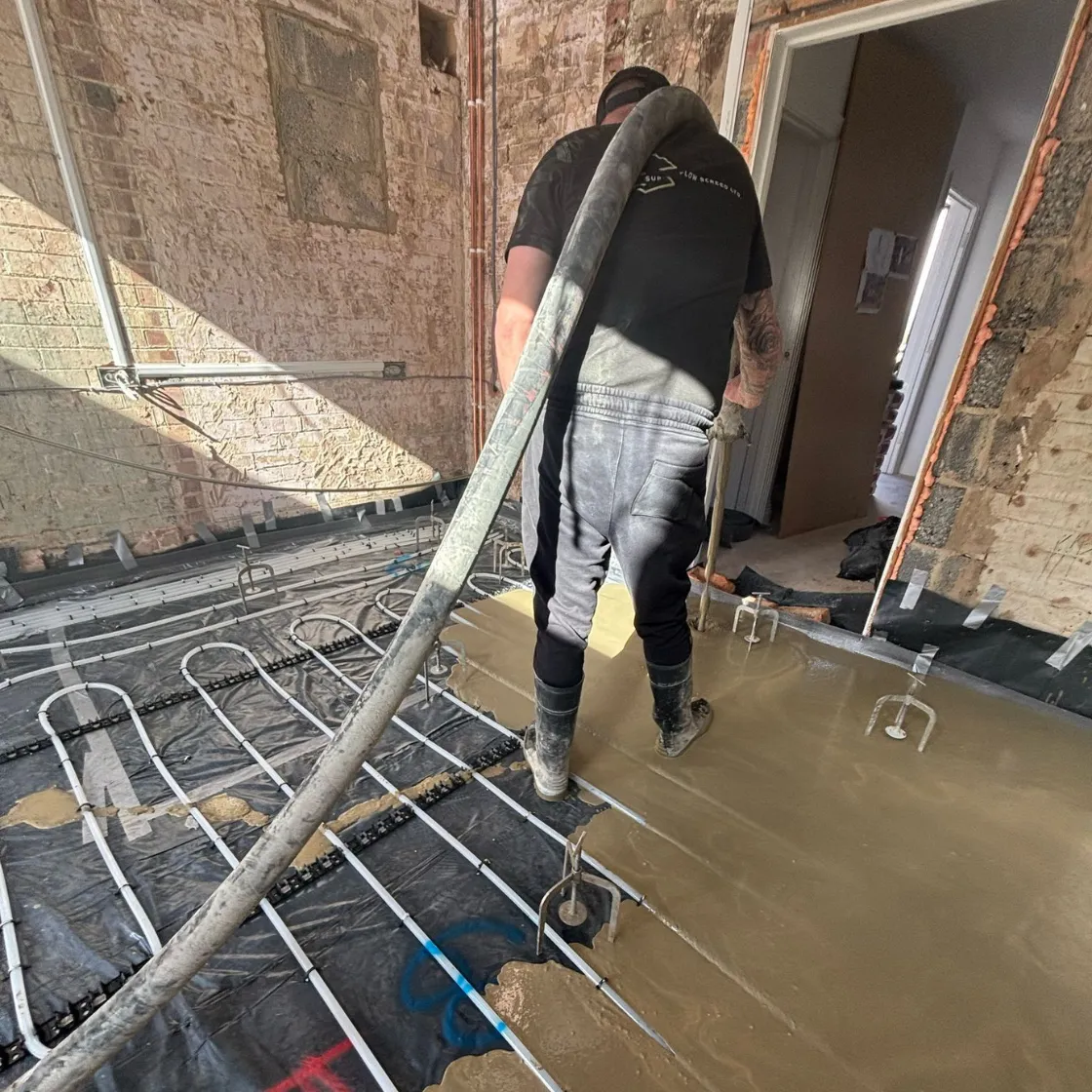
Liquid Screed Thickness Guide: How Thick Should Screed Be for Different Projects?
Liquid Screed Thickness Guide: How Thick Should Screed Be for Different Projects?
Introduction
Choosing the correct screed thickness is critical for performance, durability, and cost.
Standard Thickness Guidelines
Bonded: ~25–40mm
Unbonded: ~50mm+
Floating (UFH): 50–75mm
Why Thickness Matters
Too thin:
Weak
Prone to cracking
Too thick:
Slower drying
Reduced heating efficiency
Thickness for Underfloor Heating
Must fully cover pipes
Typically 50–65mm total
Common Mistakes
Guessing thickness
Overcompensating
Ignoring manufacturer specs
Conclusion
Correct thickness ensures performance and longevity.
CTA
👉 Get expert guidance on the right specification.
✍️ BLOG 14
Top 10 Liquid Screed Mistakes (And How to Avoid Them)
Introduction
Mistakes in screed installation can be expensive and difficult to fix.
Top Mistakes
Poor preparation
Incorrect thickness
Skipping laitance removal
Tiling too early
Poor ventilation
Ignoring moisture testing
Using wrong contractor
Poor UFH installation
Rushing drying
Choosing price over quality
Why These Mistakes Matter
They can lead to:
Cracking
Uneven floors
Failed flooring
How to Avoid Them
Use experienced professionals
Follow proper process
Plan properly
Conclusion
Avoiding mistakes saves time and money.
👉 Work with experts to get it right first time.
