The Complete Guide to Liquid Screed and Underfloor Heating Efficiency
The Complete Guide to Liquid Screed and Underfloor Heating Efficiency
If you're installing underfloor heating, choosing the right screed can make a significant difference to how efficiently your system performs. While traditional sand and cement screed has been used for many years, liquid screed has become the preferred choice for modern homes and commercial buildings thanks to its superior heat transfer and faster installation.
At Surrey Flow Screed, one of the most common reasons our customers choose liquid screed is to maximise the performance of their underfloor heating system.
Why Liquid Screed Is Better for Underfloor Heating
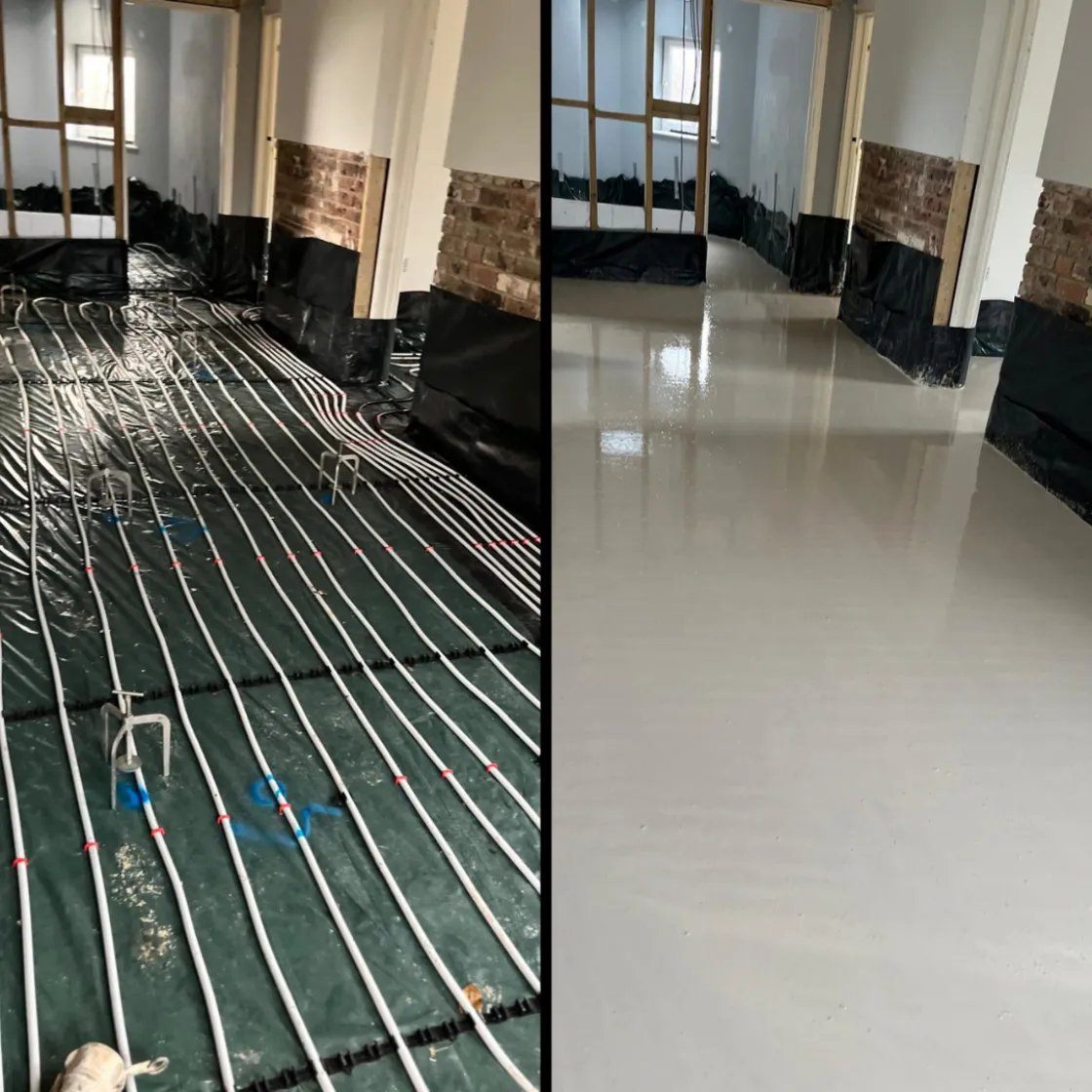
Unlike traditional screed, liquid screed flows easily around underfloor heating pipes, completely encapsulating them and eliminating air gaps.
This close contact allows heat to transfer more efficiently from the pipes into the floor, creating an even temperature across the entire room. The result is a heating system that responds faster and operates more efficiently.
For homeowners, this can mean a more comfortable living space and lower energy consumption over time.
Improved Heat Distribution
Traditional screed can sometimes leave small voids around heating pipes, reducing heat transfer and creating uneven floor temperatures.
Liquid screed naturally self-levels, producing consistent coverage and helping to ensure every part of the floor heats evenly. This makes it particularly well suited to large open-plan living areas, kitchens and commercial spaces.
Across Surrey and the South East, we've installed liquid screed for hundreds of projects where underfloor heating was a key part of the design.
Faster Installation, Better Results
Another advantage is the speed of installation.
Liquid screed can be pumped quickly across large floor areas, reducing labour and helping projects stay on schedule. Once installed, it provides a smooth, level surface that's suitable for a wide range of floor finishes, including tiles, engineered wood and luxury vinyl flooring.
Combined with an efficient underfloor heating system, it's an ideal solution for modern construction.
Common Mistakes to Avoid
To get the best performance from your underfloor heating, avoid these common mistakes:
Switching the heating on before the screed has cured.
Installing flooring before the screed has reached the correct moisture level.
Using the wrong screed depth.
Choosing an installer without experience in underfloor heating projects.
Careful planning and professional installation help ensure your heating system performs as intended from day one.
Frequently Asked Questions
Does liquid screed improve underfloor heating efficiency?
Yes. Its excellent thermal conductivity and complete encapsulation of the heating pipes allow heat to transfer more effectively than traditional screed.
Can liquid screed reduce heating costs?
Because the system transfers heat more efficiently, many homeowners find their underfloor heating operates more effectively, which can contribute to lower energy use.
Is liquid screed suitable for all underfloor heating systems?
In most cases, yes. Liquid screed is compatible with both water-based and electric underfloor heating systems, although the correct specification should always be confirmed before installation.
Maximise the Performance of Your Underfloor Heating
Whether you're building a new home, renovating an existing property or managing a commercial development, Surrey Flow Screed provides professional liquid screed installations throughout Surrey and the South East. Our experienced team can recommend the ideal screed specification to help you get the very best performance from your underfloor heating system.
Contact Surrey Flow Screed today for expert advice and a free, no-obligation quotation.
